Police Say Recorded Stakes of 39, 40 and 41 Per Cent Still Added Up to Full Foreign Control of Three Samut Sakhon Companies
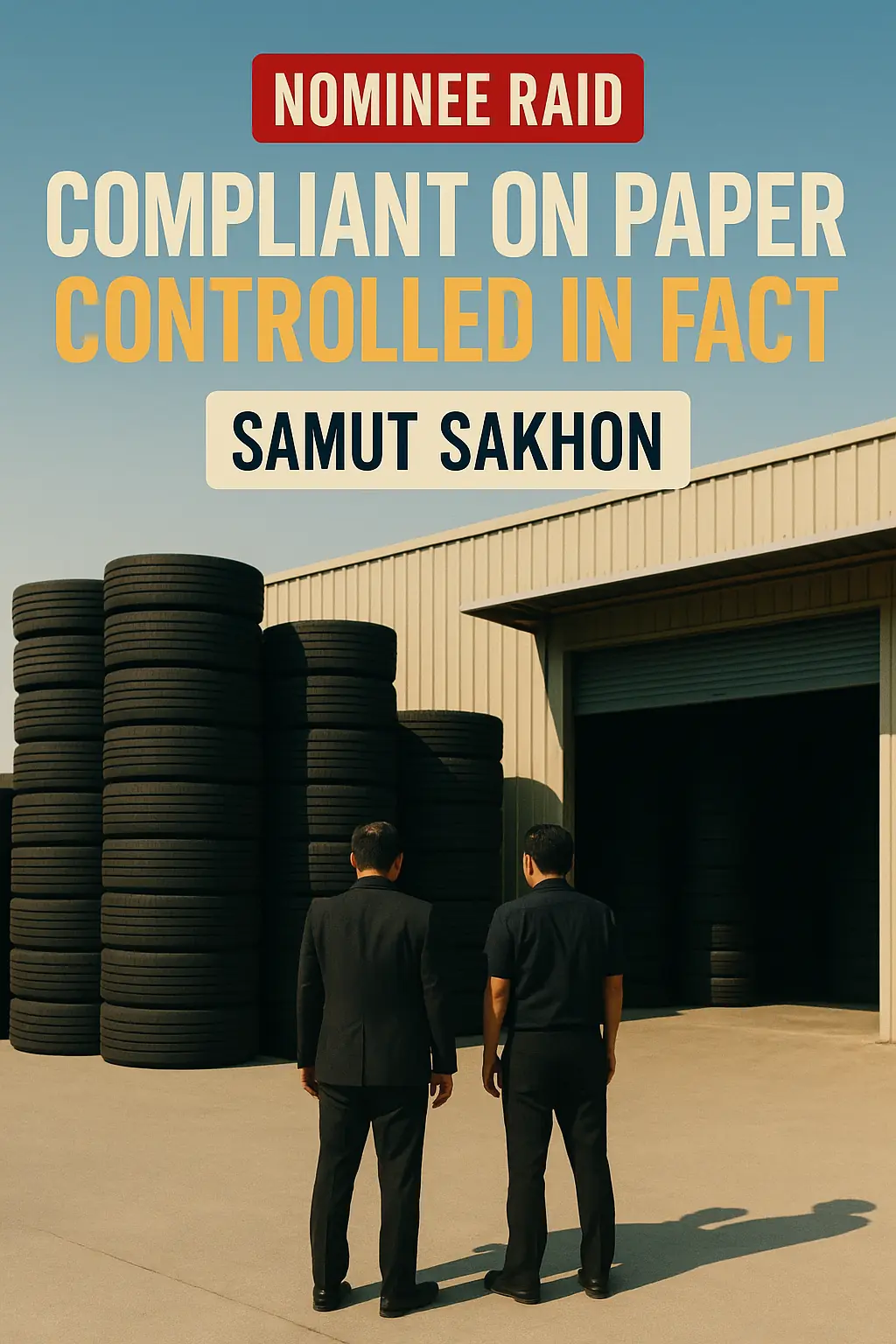
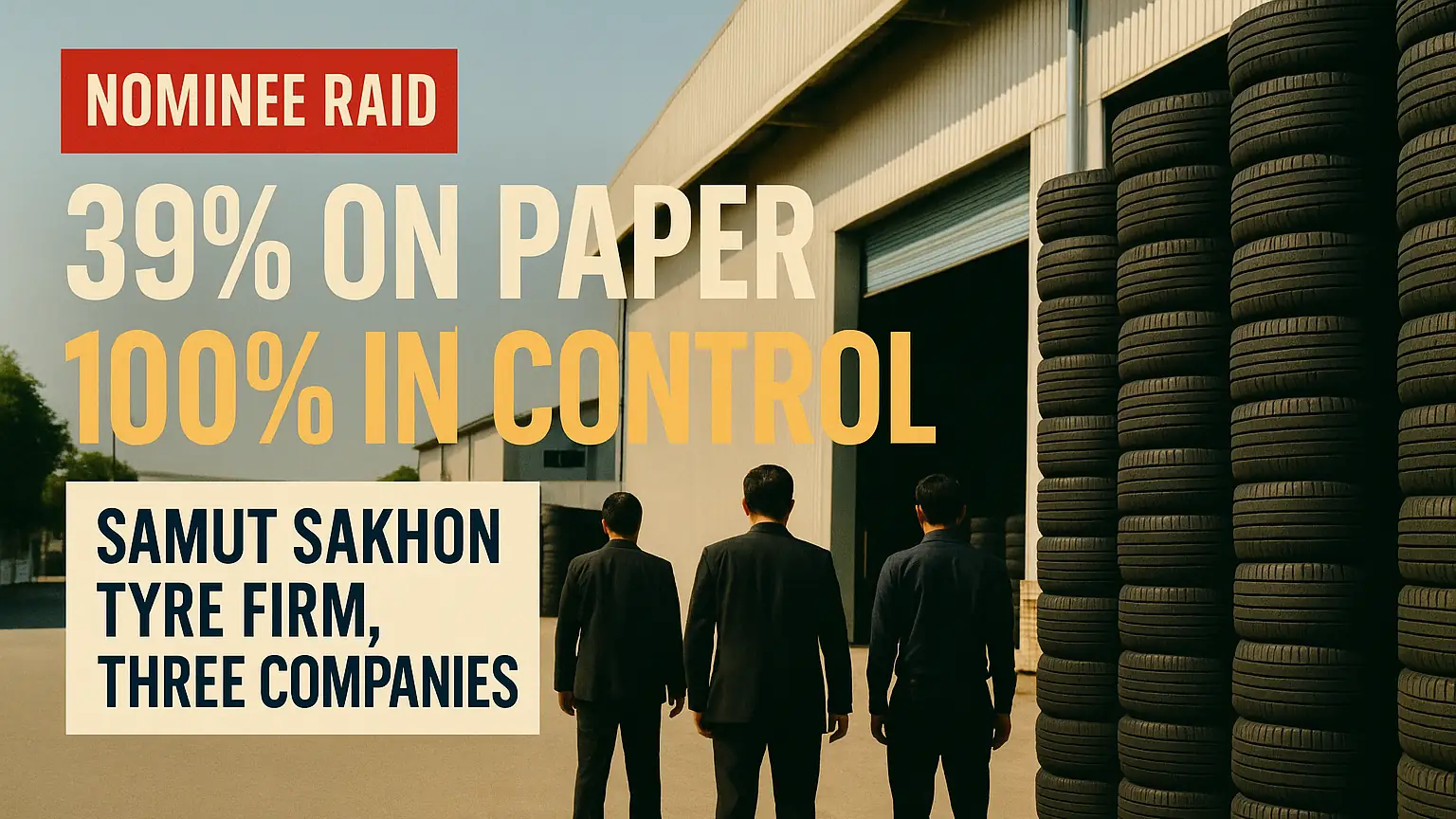
Three tyre-trade companies in Samut Sakhon each showed a foreign stake under 50 per cent. Investigators say cross-shareholdings between the companies still handed one man effective full control.
A Raid on a THB 600 Million Tyre Business Exposes a Register That Only Looked Compliant #
Key takeaways
- Three registers, one pattern: stakes of 39%, 40% and 41% in Ketongly, KTL and AEC each sat under the 50% line.1
- Cross-shareholding closed the loop: cross-holdings gave the foreign principal effective control of two of the three.1
- A THB 9 million title deed surfaced: the only property named in the case.1
- Better-than-Freehold™ takeaway: no Thai shareholder, no register to go behind.
What Did Police Find at the Om Noi Tyre Business? #
- How Did Three Companies Holding Shares in Each Other Add Up to Full Control?
- Is Nominee Conduct Itself Now a Predicate Offence?
- What Does This Mean If You Already Hold Shares in a Thai Company?
- The Better-than-Freehold™ Solution
- FAQ Section
- Related Terms
- Expert Guidance
How Did Three Companies Holding Shares in Each Other Add Up to Full Control? #
None of the three numbers crossed the line owners watch. Ketongly, AEC and KTL recorded his stake at 39%, 41% and 40% respectively, each inside the 51/49 split.1 Investigators concluded Ketongly and KTL's cross-holdings still amounted to his effective 100% ownership, while at AEC three Thai employees allegedly held the shares, and police say he admitted retaining full control through them.1 A land title deed worth THB 9 million was among the documents, the only property in the case.1
He is separately wanted by China over alleged corruption in a government project under a May 2016 warrant; facial recognition identified him, and two more alleged nominee shareholders are being pursued.1 The case also touched civil registration: police allege a teenager was given an identity built on a deceased child's birth certificate, supplied by a Thai woman.2
Is Nominee Conduct Itself Now a Predicate Offence? #
Not yet, and the distinction matters. AMLO's legal adviser, Peerathorn Vimollohakarn, said corruption-linked assets could be seized because corruption is already a predicate offence under Thailand's Anti-Money Laundering Act.3 That applies now. Holding shares through a Thai name for a foreign beneficiary is not yet on that list. A February 2025 Cabinet package would add it, but the December 2025 House dissolution interrupted passage: direction, not deadline.
The finding sits under the Foreign Business Act, not the Anti-Money Laundering Act. The Department of Business Development, under the Ministry of Commerce, administers it. Section 36 carries up to three years and/or THB 100,000 to 1,000,000, reaching nominee and beneficiary alike, plus court-ordered cessation of the shareholding and daily fines of THB 10,000 to 50,000, not dissolution. Land held this way can separately face forced disposal by the Land Department.
What Does This Mean If You Already Hold Shares in a Thai Company? #
A percentage on the register answers the wrong question. Anyone in a high-risk property-owning company built on the 51/49 assumption faces the test that applied here: layering companies so they hold one another concentrates control rather than hiding it. Orderly divestment typically runs eight to sixteen weeks. That should shorten to under four as Better-than-Freehold™ grows. The AMLO comment cuts a second way: a foreign criminal matter unrelated to property still reached Thai assets through the predicate-offence route. Structure risk and personal risk are not separate compartments.
The Better-than-Freehold™ Solution #
Compliance comes first. A Better-than-Freehold™ structure has no Thai shareholder, so there is no percentage to test and no cross-shareholding to unpick. Thailand Investor Network, a 100% Thai-owned property holding and management company, holds legal title and grants a registered 30-year lease.
Security follows. SPH Trustees Ltd, a Labuan FSA-regulated trust company, holds the lease and the first-priority mortgage for the client, with the Option Agreement appended to that registered mortgage. Clear Blue Security Agents (CBSA) enforces those rights without court dependency.
The benefits complete the picture: financing to 50% LTV (expected H1 2027), resale by assignment of trust interest, succession without Thai probate.
Free to start · No obligation · Your decision at every stage
FAQ Section #
Related Terms #
- Nominee Company Risks in Thailand - this case's pattern
- Foreign Business Act Thailand - the section 36 penalty
- Anti-Money Laundering Act Thailand - the predicate-offence line
- Gatekeeper Liability in Thailand - advisers' own exposure
Expert Guidance #
Immediate Action Required #
A Thai majority on paper does not settle the question; related companies holding one another's shares can be traced the same way. Contact the Better-than-Freehold™ advisory team for a confidential compliance assessment.
Long-term Security Strategy #
A structure that never puts a Thai name on the register removes the test entirely.
Free to start · No obligation · Your decision at every stage
Conclusion #
Three registers under 50%, and investigators still found full foreign control. The 51/49 split is a paperwork test; cross-shareholding is one way it fails.
References #
This article is provided for general information only and does not constitute legal, tax, or investment advice. Laws and enforcement practices change; obtain advice tailored to your situation before acting.
Footnotes #
About the Author: Andrew Moore FPFS, CDir
Chairman, Better-than-Freehold™
Andrew Moore has been an active investor in Thai property since 2004. He is a Chartered Director and a Fellow of the Personal Finance Society. He has invested in and built properties in several countries since the late 1990s and first invested in Thailand in 2004. Having owned homes in Bangkok, Samui, Phangan and Phuket he can offer a unique perspective on Thailand's property markets together with past and future trends in both ownership and investor opportunities.